The Developmental State Rewired: Japan’s Quantum Policy Between Innovation and Security
[Séminaire] Sebastian MASLOW (The Univ. of Tokyo)
18:00~19:30 601号室&オンライン 英語 通訳なし
Rather than merely being a matter of scientific prestige, advances in quantum technology are now regarded as “critical technologies” that will impact the global economic and military balance of power. The United States and China are investing heavily in quantum technology, thus defining it as a core strategic domain. In this quantum race, policymakers and scientists must address concerns about supply chain security, military applications, and open scientific exchange. As a key US security ally and Chinese trading partner located at the forefront of the Sino-US rivalry in the Indo-Pacific, Japan’s stakes are especially high. Despite its strong legacy of industrial policy and technological development, Japan’s position has weakened in the face of US dominance in cutting-edge technology and China’s state-driven technological ascent. This includes China’s control over rare earth minerals, which are essential to semiconductor supply chains. Against this backdrop, quantum technology is not just another high-tech sector; rather, it is a field in which Japan’s broader economic security strategy, as well as its norms and principles on military-related research, are being tested. Consequently, Prime Minister Ishiba Shigeru declared 2025 “the first year of quantum industrialization.” His successor, Takaichi Sanae, defined quantum as a “strategic technology” for economic security and growth.
In this talk, I trace the development of Japan’s quantum strategy back to the late 2010s. In doing so, I identify the key actors and critical junctures that defined its development and argue that Japan’s strategy exemplifies the persistence and adaptation of the developmental state model in an era of technology policy securitization. Unlike the old developmental state, which primarily focused on industrial competitiveness and growth, Japan’s quantum strategy links technological development with national security to maintain its strategic and industrial relevance.
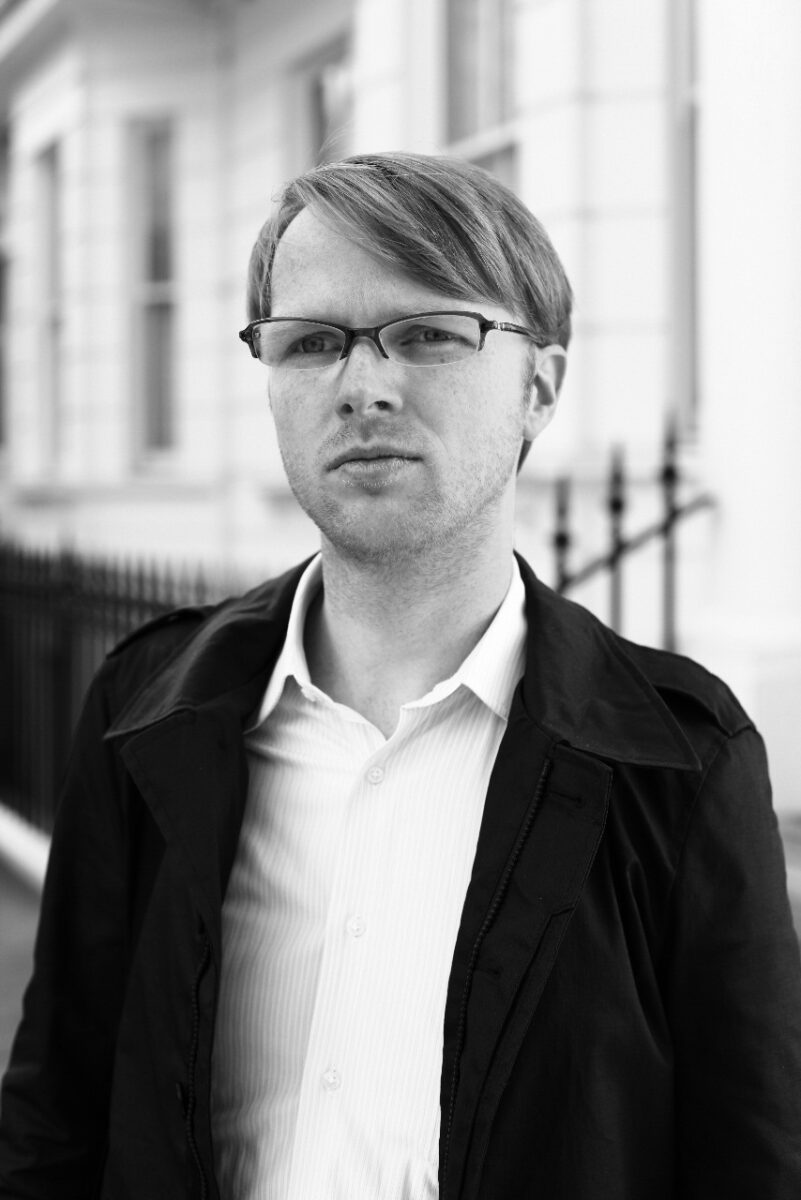
Sebastian MASLOW (The Univ. of Tokyo)
Sebastian Maslow is Associate Professor at the Institute of Social Science, The University of Tokyo. He holds a PhD from Tohoku University. Before joining the University of Tokyo, he was Senior Lecturer in Political Science and International Relations at Sendai Shirayuri Women’s College, and Assistant Professor at Tohoku University’s School of Law, and the Graduate School of International Cooperation Studies at Kobe University. His current research focuses on the technology and national security nexus, East Asian international relations, and Japan’s foreign and defense policy. He is the co-editor of Risk State: Japan’s Foreign Policy in an Age of Uncertainty (Ashgate, 2015), and Crisis Narratives, Institutional Change, and the Transformation of the Japanese State (SUNY Press, 2021).
Moderator: Malo MOFAKHAMI (Sorbonne Paris Nord Univ., IFRJ-MFJ, CNRS)
Organization: IFRJ-MFJ
Partner: Economic department, Embassy of France in Japan