Fraying pathways: labour market liberalization, inequality, and social isolation in contemporary Japan
[Séminaire] ARITA Shin (The Univ. of Tokyo), ISHIDA Kenji (The Univ. of Tokyo)
18:00~20:00 601号室&オンライン 英語 通訳なし
Drawing on microdata from the Employment Status Survey and the Japanese Life Course Panel Surveys (JLPS), these two presentations examine how shifts in Japan’s labour market structure since the 1990s have reshaped individual life chances along intersecting lines of education, gender, and social connectivity. The first presentation profiles high-earning workers without a university degree, showing that their success has historically depended on Japan’s company-based skill formation system — particularly long-term regular employment in large companies — a pathway now eroding for younger cohorts as non-regular work expands. The second presentation traces trajectories of social connectivity across the life course, revealing that labour market precarization coincides with growing personal isolation, especially among men, with cumulative disconnection linked to lower life satisfaction and diminished hopes for the future. Together, the two studies highlight how institutional deregulation and the decline of stable employment are deepening social cleavages in Japan, with consequences that extend from economic inequality into the fabric of everyday social life.
High-earning non-university graduates in Japan: profile and changing prospects
With AI spreading throughout workplaces, there is renewed interest in workers who earn high incomes without a university degree. This talk asks three central questions about Japan: (1) How many such workers are there? (2) What jobs do they hold? (3) What makes their high earnings possible? The goal is to link their profile to the Japanese employment system and ask how that profile is changing.
Microdata from the Employment Status Survey shows considerable overlap in the earnings distributions of high school and university graduates among men. Although university graduates earn more on average, a sizable share of high school graduates also attain relatively high earnings. Among women, the overlap is much smaller and such opportunities are far rarer.
Where do these high earners work? Occupation plays a role – professional, managerial, and clerical jobs are over-represented – but company size and employment status are also significant factors. For men, the proportion rises sharply in companies with over a thousand employees and in the public sector; for women, the rise is concentrated in the public sector. Furthermore, almost all high earners are regular employees; high earnings are extremely rare among non-regular workers. Data from the Japanese Life Course Panel Survey (JLPS) shows that many high school graduates are promoted to managerial positions at a pace comparable to university graduates, indicating that in-company status attainment is their principal route to high earnings.
These patterns reflect Japan’s company-based skill formation system. Long-term employment and strong internal labour markets allow companies to invest in employees over decades, with the resulting company-specific skills rewarded within the organization. Unlike Western pathways rooted in occupation-specific skill development, the Japanese route to high earnings without a degree runs primarily through the organization. This is why high school graduates with high trainability have been able to accumulate skills within companies and attain earnings comparable to those of degree-holders. Because this investment has historically centred on male regular employees, however, opportunities for women in the private sector have remained narrow.
This pathway is now under strain. Since the 2000s, growing labour market fluidity and the replacement of regular employment with non-regular jobs have made such positions increasingly hard for younger high school graduates to secure. Younger cohorts are unlikely to enjoy the high-earning opportunities of their predecessors. These trends may substantially deepen social cleavages in Japan along educational lines in the years ahead.
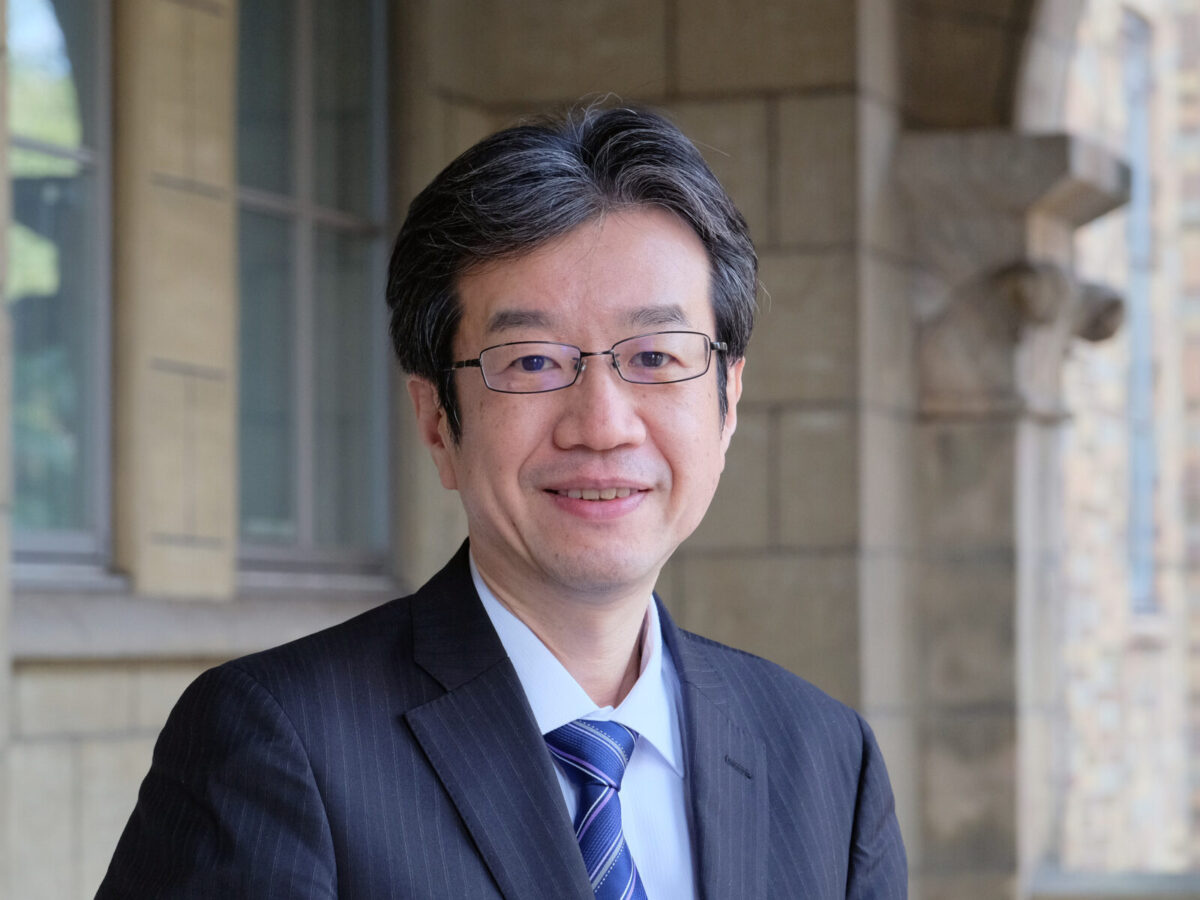
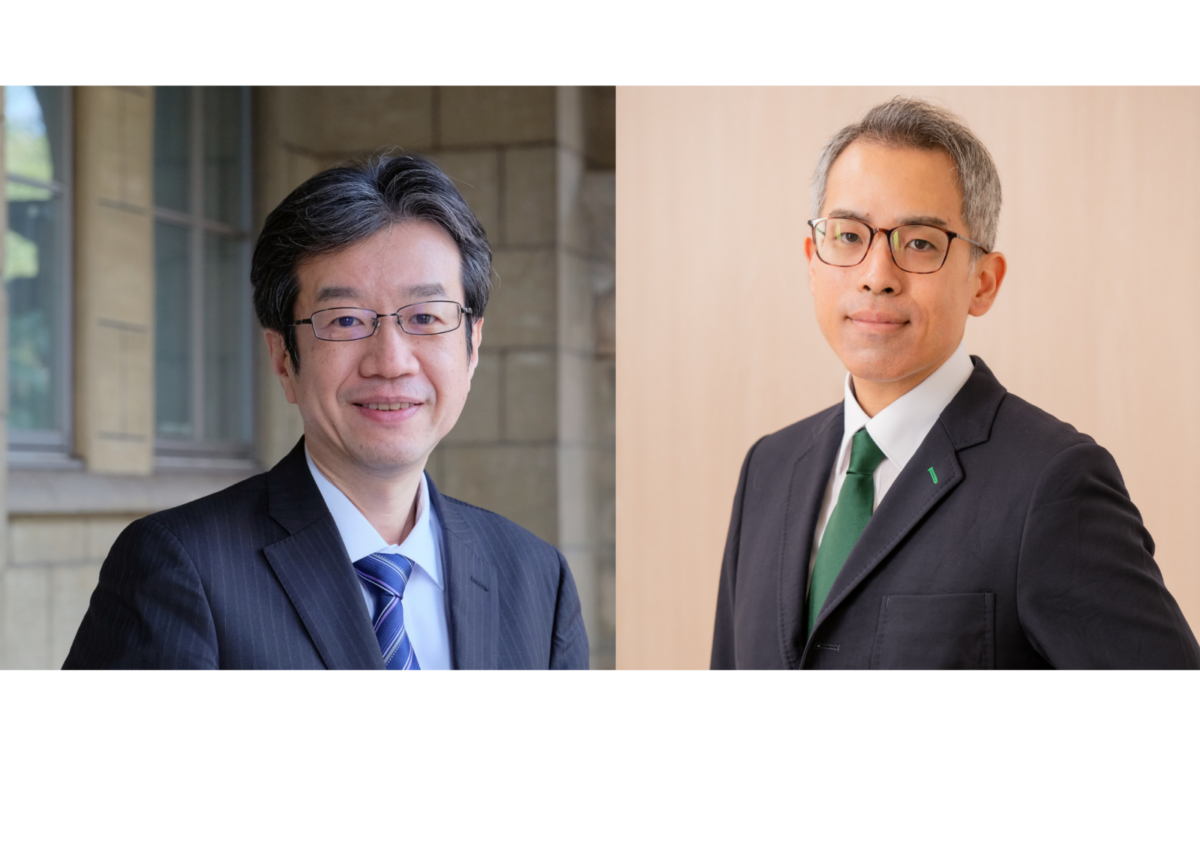
Shin Arita (Institute of Social Science, University of Tokyo)
Shin Arita is a comparative sociologist and professor at the Institute of Social Science, University of Tokyo. His research focuses on the labour market, educational systems, and social stratification in East Asia. He earned his PhD in area studies from the University of Tokyo after completing his undergraduate studies in sociology. Selected publications include Education and Social Stratification in South Korea (University of Tokyo Press, 2020) and Sociology of Reward Inequality Based on Employment Positions: A Comparison of Non-standard Employment and Social Stratification in Japan and Korea (University of Tokyo Press, 2016, in Japanese). His work has received several academic awards, including the JSPS Prize from the Japan Society for the Promotion of Science.
Who stays connected? Social connectivity trajectories in contemporary Japan
Since the late twentieth century, industrialized societies have witnessed considerable demographic shifts in marriage, childbirth, and family formation, often conceptualized as the Second Demographic Transition. Furthermore, the labour market structure has been moving towards greater deregulation. While social-scientific antecedents are centred on the European or Western context, Japan is no exception to these trends. In the lost decades since the 1990s, Japanese companies have responded to severe economic conditions by replacing full-time jobs with non-regular employment, particularly for young people. This has exposed Japanese youth and middle-aged people to labour market precarity and left them less socially connected than before; Japan is entering an era of deregulation and individualization in both economic and social life.
In this talk, I focus on trajectories of social connectivity in contemporary Japan, asking: (1) How many and what kinds of social connections do Japanese youth and middle-aged people experience over their life course? (2) Are those trajectories associated with people’s subsequent hopes for their lives and Japanese society, and life satisfaction? A life course perspective is theoretically useful for interpreting the trajectories of social connectivity. In line with Ronald Breiger’s idea of duality, social connectivity comprises both personal interactions and group affiliations, which are mutually constituted through overlapping membership.
Leveraging life course and duality perspectives to address these questions, I utilize the Japanese Life Course Panel Surveys for Youth and Middle-aged (JLPS-YM). The key variables are two-fold: (1) personal connections (social support, friendship, and socializing, e.g. eating out and chatting) and (2) group affiliations. Multichannel sequence analysis across the nine two-year intervals (18 years in total) and subsequent cluster analysis reveal considerable gender and age gradients: men are more likely to be isolated from personal connections and neighbourhood affiliation, while older respondents are more embedded in social connectivity through group affiliations. In addition, neighbourhood embeddedness emerges as a key mediating condition for sustaining personal connections. Finally, while there is no association between the trajectories of group affiliations and hopes for one’s life and Japanese society, or life satisfaction, the declining cluster in the trajectories of personal connections is linked to significantly lower levels of hope and life satisfaction. My findings suggest that cumulative exposure to social (dis)connectivity over the life course influences people’s opinions and attitudes about their lives and society.

Kenji Ishida (Institute of Social Science, University of Tokyo)
Kenji Ishida is associate professor at the Center for Social Research and Data Archives, Institute of Social Science, University of Tokyo. He received his PhD in education from Tohoku University. His research spans social stratification and inequality, labour market inequalities across the life course, social isolation and social networks, immigration and immigrant integration, and social survey methodology. He has been a leading member of the Japanese Life Course Panel Surveys Project, a long-running panel survey that has tracked Japanese youth and middle-aged adults for nearly two decades and is currently transitioning to web-based formats. He is co-editor of In Search of Second Chances in a Divided Society (Keiso Shobo, 2024, in Japanese). His work has appeared in Social Forces, International Migration Review, Frontiers in Sociology, Contemporary Japan, and other international and Japanese journals.
Moderator: Malo MOFAKHAMI (Sorbonne Paris Nord Univ., IFRJ-MFJ, CNRS)
Organization: IFRJ-MFJ
Partner: Economic department, Embassy of France in Japan