Men in Metal: Heroic Statuary in Modern Japan
[Conférence] Sven SAALER (Sophia Univ.)
18:00-20:00 Room 601 en anglais sans traduction
The construction of narratives featuring heroes and villains is a core element of the master narratives of modern nation-states. These narratives have been disseminated to the broader public through diverse media. In modern Japan, this included biographical writings, historical accounts, history and moral education textbooks, as well as public monuments, memorials, and shrines. Among these, public statuary of historical figures played a particularly significant role, as such monuments were erected in large numbers across the country, occupying newly created public spaces.
This talk presents a quantitative analysis of the heroes and villains represented in public statuary in modern Japan and examines case studies of key monuments dedicated to “national heroes”. It also traces how the historical figures employed as embodiments of the nation evolved over time, as shifting political contexts demanded new modes of representing national identity and values. The presentation draws on my book Men in Metal: A Topography of Public Bronze Statuary in Modern Japan (Brill, 2020) (now Open Access).
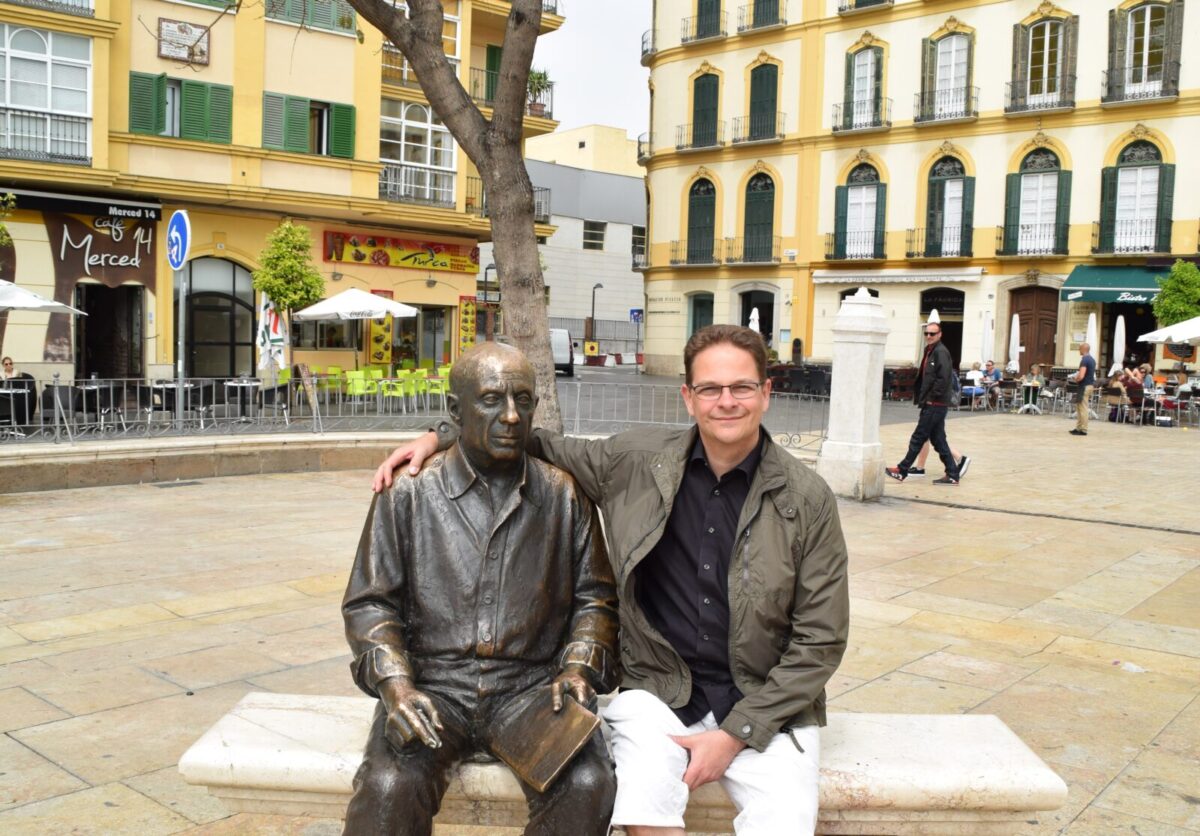
Sven SAALER (Sophia Univ.)
Sven Saaler is Dean of the Graduate School of Global Studies (GSGS) and Professor of Modern Japanese History at Sophia University in Tokyo as well as a member of the Steering Committee of the National Institutes for the Humanities (NIHU). After earning a Ph.D. in Japanese Studies and History from Bonn University, he held positions at Marburg University, the German Institute for Japanese Studies (DIJ Tokyo), and The University of Tokyo. He was also visiting/adjunct professor at Bonn University, ICU, Temple University Japan Campus, Kyushu University, Yamaguchi University, and Heidelberg University.
He is author of Politics, Memory and Public Opinion (Iudicium, 2005) and Men in Metal: A Topography of Public Bronze Statuary in Modern Japan (Brill, 2020) as well as co-author/co-editor of Pan-Asianism in Modern Japanese History (Routledge, 2007), The Power of Memory in Modern Japan (Global Oriental/Brill, 2008), Pan-Asianism: A Documentary History (2 vols., Rowman & Littlefield, 2011), Under Eagle Eyes: Lithographs, Drawings and Photographs from the Prussian Expedition to Japan, 1860-61 (in German, Japanese and English, 2011), Images in Japanese-German Relations, 1860/2010 (Brill, 2017), Kiki no jidai to ‘chi’ no chōsen (2018), and the Routledge Handbook of Modern Japanese History (2017).
Sven Saaler was born in the German city of Mainz and raised in a small village surrounded by vineyards in Rhineland-Palatinate. As a student, he spent four years in Kanazawa, in Ishikawa Prefecture, and has been living in Tokyo since 2000.
Moderator: Thomas GARCIN (Paris Cité Univ., IFRJ-MFJ)
Organization: IFRJ-MFJ